
Transforming Asia’s Education for Growth
-
Home
-
Transforming Asia’s Education for Growth


Transforming Asia's Education for Technical Growth and Economic Empowerment
Education stands at the heart of Asia's economic, social, and technological transformation. By 2025, Asia — home to over 4.7 billion people — faces a paradox: rapid economic growth combined with persistent education challenges. While countries like China, Japan, Singapore, and South Korea lead globally in innovation and skill readiness, many Asian nations still struggle with digital divides, outdated curricula, regulatory bottlenecks, and declining education quality.
The 2025 Education Landscape
-
Digital Divide
-
Employability Crisis
-
Regulatory Challenges
-
Global Competitiveness

A Critical Turning Point
The education sector in Asia stands at a critical turning point in 2025. Rapid technological advancements, evolving job markets, and global competition are reshaping how skills are acquired and applied. However, many Asian countries still face deep-rooted challenges such as unequal access to quality education, outdated curricula, teacher shortages, and the growing digital divide.
If these gaps remain unresolved, the region risks producing a lost generation of graduates who lack the competencies needed for the AI-driven, automation-first, and green-tech economy of the future. But 2026 offers a unique opportunity — by implementing strategic educational reforms and leveraging technology, policy, and innovation, Asian nations can transform their education systems to meet the demands of the future workforce.
Key Challenges in Education (2025)
-
Digital Divide
-
Curriculum Relevance
-
Regulatory Inefficiency
-
Quality Pressure

Graduate Employability Crisis
McKinsey's Future of Work Report (2024) warns that 800 million jobs globally will be automated by 2035, with Asia accounting for 55% of those disruptions.
-
AI & Automation
-
Data Science & Cybersecurity
-
Green Tech & Sustainability
-
Soft Skills like Design Thinking & Problem Solving
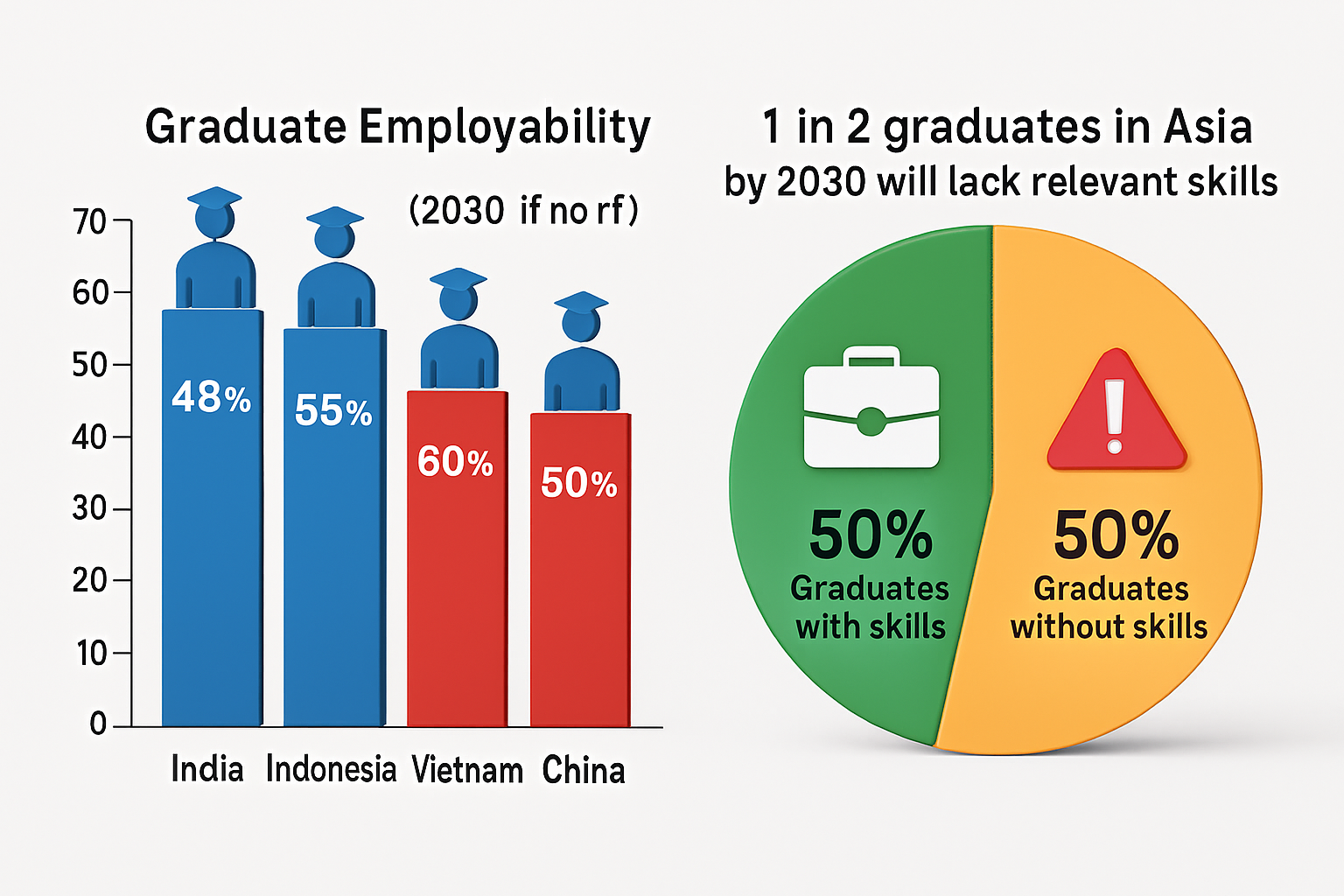
Current Problem
- Asia is at the centre of the 4th Industrial Revolution, yet adoption of emerging technologies is uneven:
- Japan, South Korea, and Singapore are among the leading countries in AI development.
- India, Vietnam, and Indonesia are struggling with digital readiness.
According to PwC’s AI Readiness Index 2024, only 5 Asian countries rank in the global top 30.
Technology Adoption Gap
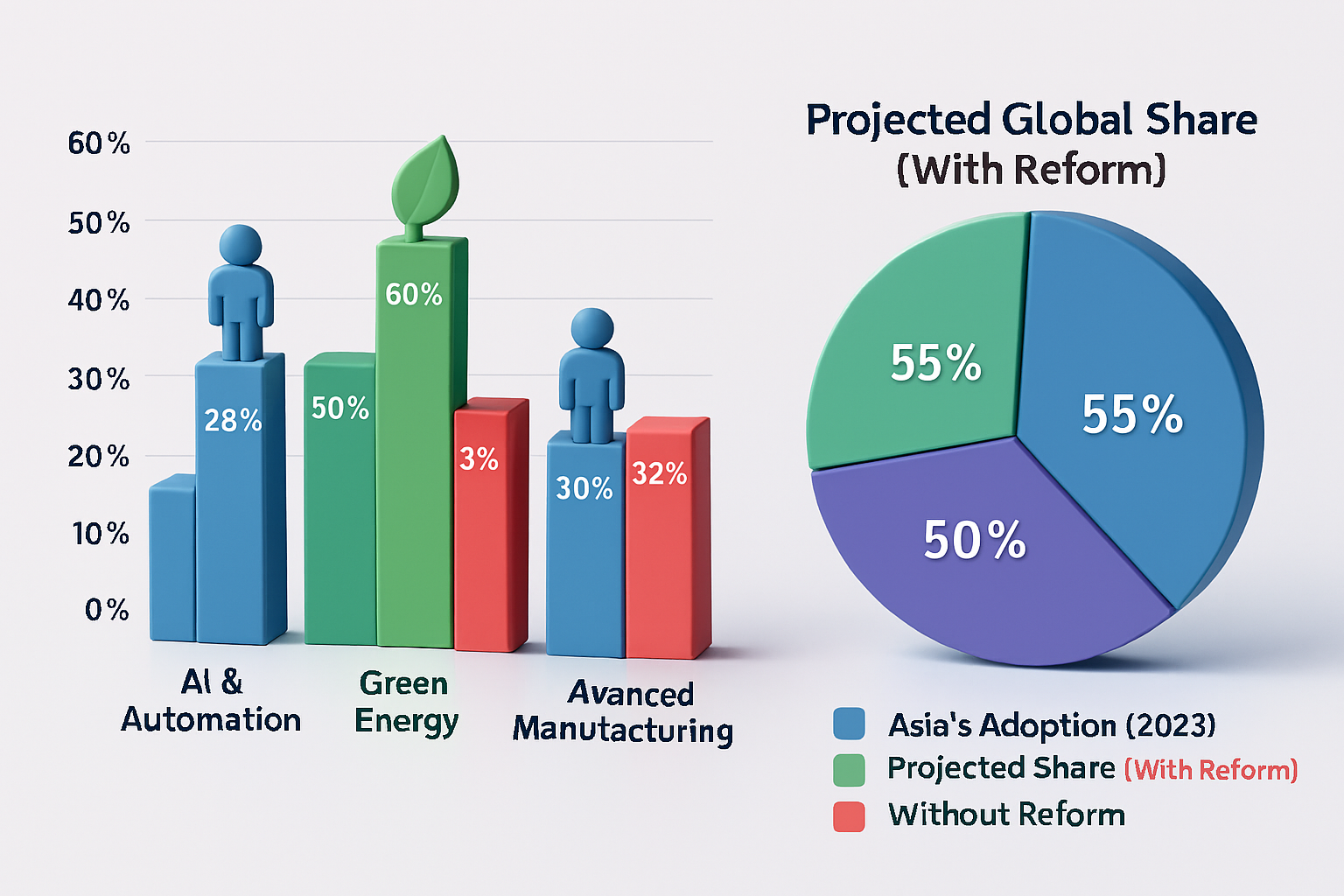

Industries fail to modernise

Forecasted for AI-driven economies by 2035

Especially for coastal nations like Bangladesh, Indonesia, and the Philippines
2030.
The Upside of Acting Now (2026 Onwards)
-
Asia can contribute 50%+ of global tech innovation if AI-driven education reforms are implemented.
-
Asian EdTech investment will reach $300B by 2030.
-
Skill-ready graduates will add $2.5 trillion to Asia's GDP.
-
Governments like India, Indonesia, and Vietnam will emerge as AI and green-tech hubs.

Factor | If Reforms Begin in 2026 | If Reforms Are Delayed |
|---|---|---|
| Graduate Employability | 75% by 2035 | 45% by 2035 |
| Asia’s Share in Global Tech Innovation | 50%+ by 2030 | ~25% |
| AI & Automation Adoption | Rapid integration | Fragmented, slower growth |
| Green Job Creation | 65M+ jobs by 2035 | <30M jobs |
| Economic Contribution | Adds $2.5 trillion GDP by 2035 | Loses $1.3 trillion opportunity |
Monitoring, KPIs and Evaluation
- Quarterly Tracking
- Semi-Annual Tracking
- Annual Tracking
- Per Procurement Cycle

Share this service:
Leave a comment
Your email address will not be published. Required fields are marked *